
Energy Performance Certificates (EPCs) – Know Your Rights
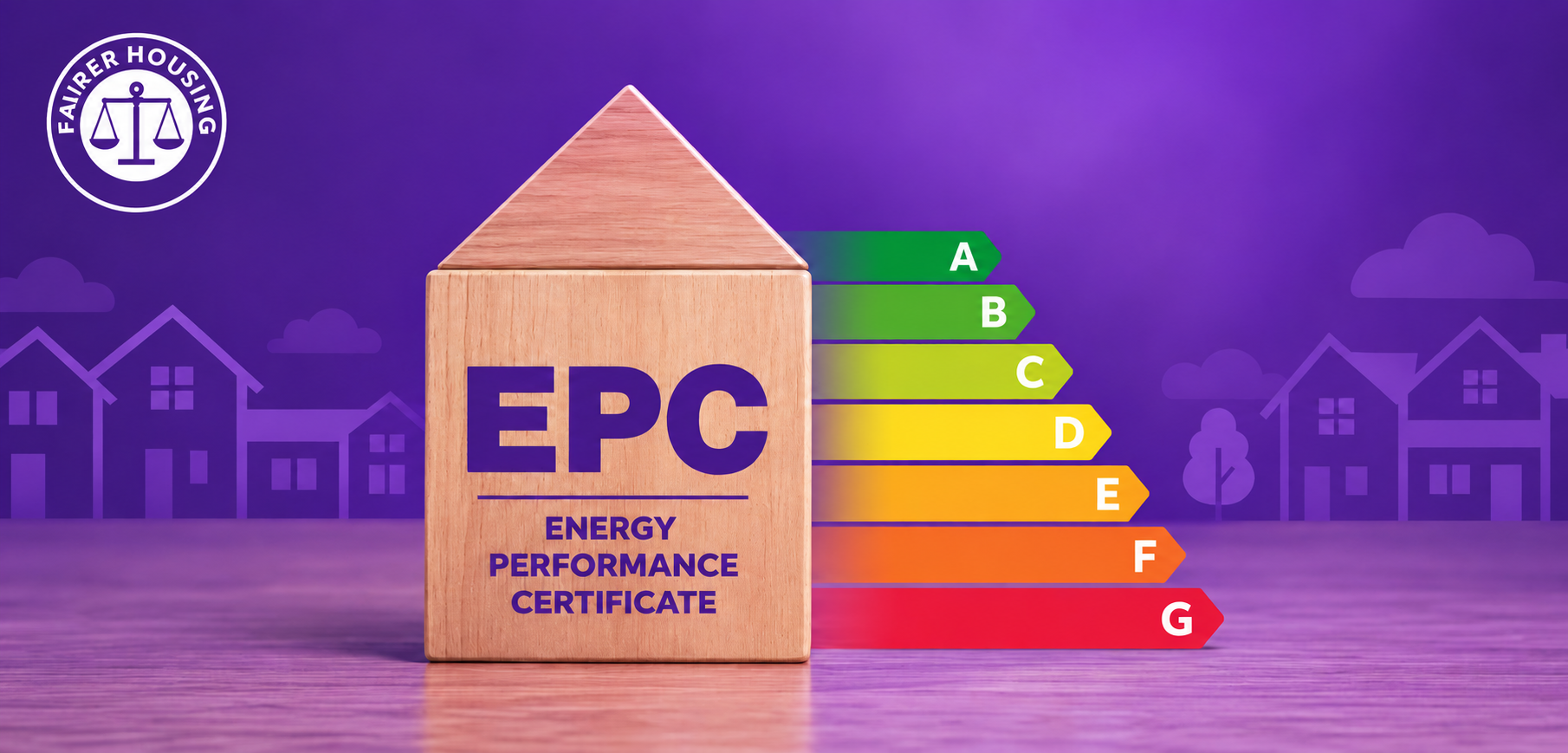
An Energy Performance Certificate (EPC) tells you how energy-efficient your home is. Properties are rated from A (most energy efficient) to G (least energy efficient). An EPC can give you an idea of how expensive a home may be to heat and includes recommendations for improving its energy efficiency.
What does the law say?
In most cases, a privately rented property must have a valid EPC. Your landlord or letting agent should make the EPC available to you free of charge when the property is being marketed and provide it to you when you become the tenant. An EPC will normally be valid for 10 years. There are also Minimum Energy Efficiency Standards (MEES) which restrict landlords from letting properties with poor energy-efficiency ratings. Most privately rented homes covered by these rules must currently achieve an EPC rating of at least E, unless a valid exemption applies.
Why does your EPC matter?
Your EPC isn’t just another piece of paperwork. A poorly insulated or inefficient property can be considerably more expensive to heat. This means a property with cheaper rent could actually cost you more each month once your energy bills are taken into account. The EPC can also tell you about:
- the property’s current energy-efficiency rating;
- its potential rating if improvements are made;
- insulation, windows and glazing;
- heating and hot-water systems;
- estimated energy use; and
- recommended energy-efficiency improvements.
What should your landlord do?
Your landlord or letting agent should:
- have an EPC where one is legally required;
- make it available when the property is advertised or shown to prospective tenants;
- provide you with a copy free of charge;
- comply with the applicable minimum energy-efficiency requirements; and
- register an exemption where the property legitimately qualifies for one.
What should you do before renting?
Ask to see the EPC before agreeing to the tenancy. Don’t simply look at the rent. Check the EPC rating and consider how much the property may cost to heat, particularly if it has a relatively low energy-efficiency rating. You can also search for the property’s EPC yourself using the government’s online EPC register.
What if there is no EPC or the rating is too low?
If your landlord hasn’t provided an EPC, ask them or the letting agent for a copy. If you believe the property is being let unlawfully because it does not meet the applicable minimum energy-efficiency requirements, you can seek advice and report potential breaches to the appropriate enforcement authority. There can also be important consequences for landlords who fail to comply with their EPC obligations, including financial penalties.
Know your rights
A warm, affordable home starts with knowing how energy efficient it is. Before signing a tenancy, check the EPC. If you’re already renting and you’re concerned that your landlord hasn’t provided an EPC, your home has a very poor energy rating, or you’re struggling with housing conditions, Fairer Housing can help you understand your rights and what you can do next.